
How AI in Digital Marketing Is Changing Strategy in 2026
AI in Digital Marketing is no longer an experiment. In 2026, AI in Digital Marketing is part of teams’ workflow, from keyword research to content planning. Marketers who get results are not those who simply publish AI in Digital Marketing. They use AI in Digital Marketing to do the heavy lifting and add their judgment on top.

I have used AI in Digital Marketing for a year on SEO content projects. Below, I share what changed in the numbers I tracked and the mistakes I keep seeing. The exact workflow you can copy this week.
What AI in Digital Marketing Really Means Today
Forget the hype for a moment. AI in Digital Marketing means using machine learning and generative tools to speed up research, analysis, and repetitive tasks. AI in Digital Marketing does not mean handing your strategy to a chatbot.
The biggest shift in 2026 is where marketers spend their time. Less time goes to research. More time goes to strategy, creativity, and quality control. Here is how that looks in practice:
| Task | Before AI | With AI | Still Needs a Human |
|---|---|---|---|
| Keyword grouping | Spreadsheets and manual sorting | Intent-based clusters in minutes | Choosing which clusters matter |
| Competitor analysis | Reading pages one by one | Summarized themes and content gaps | Judging what is truly missing |
| Content briefs | Built from scratch | First-draft structure in minutes | Refining the angle and point of view |
| Optimization | Scattered notes and manual checks | Organized action checklist | Deciding priorities |
An Example: What Changed on One SEO Project
I used AI in Digital Marketing on an SEO content campaign for a service‑based website. The goal was to find content opportunities, build content structures, and optimize existing pages around search intent.
Here is what I saw:
- Time savings: Research and planning dropped from about 3–4 hours per article to 1–2 hours. That is 40–50% saved.
- Rankings: Over the months, some target keywords moved from page two or three of Google to page one.
- Traffic: Organic traffic rose by 20–30% during the period I tracked.
I want to be upfront about one thing: results varied from page to page, and I cannot credit AI in Digital Marketing alone. Faster research gave me time to improve each page. The overall strategy and final decisions stayed human‑led. If someone promises that AI in Digital Marketing will double your traffic, be skeptical.
The Biggest Mistake With AI in Digital Marketing
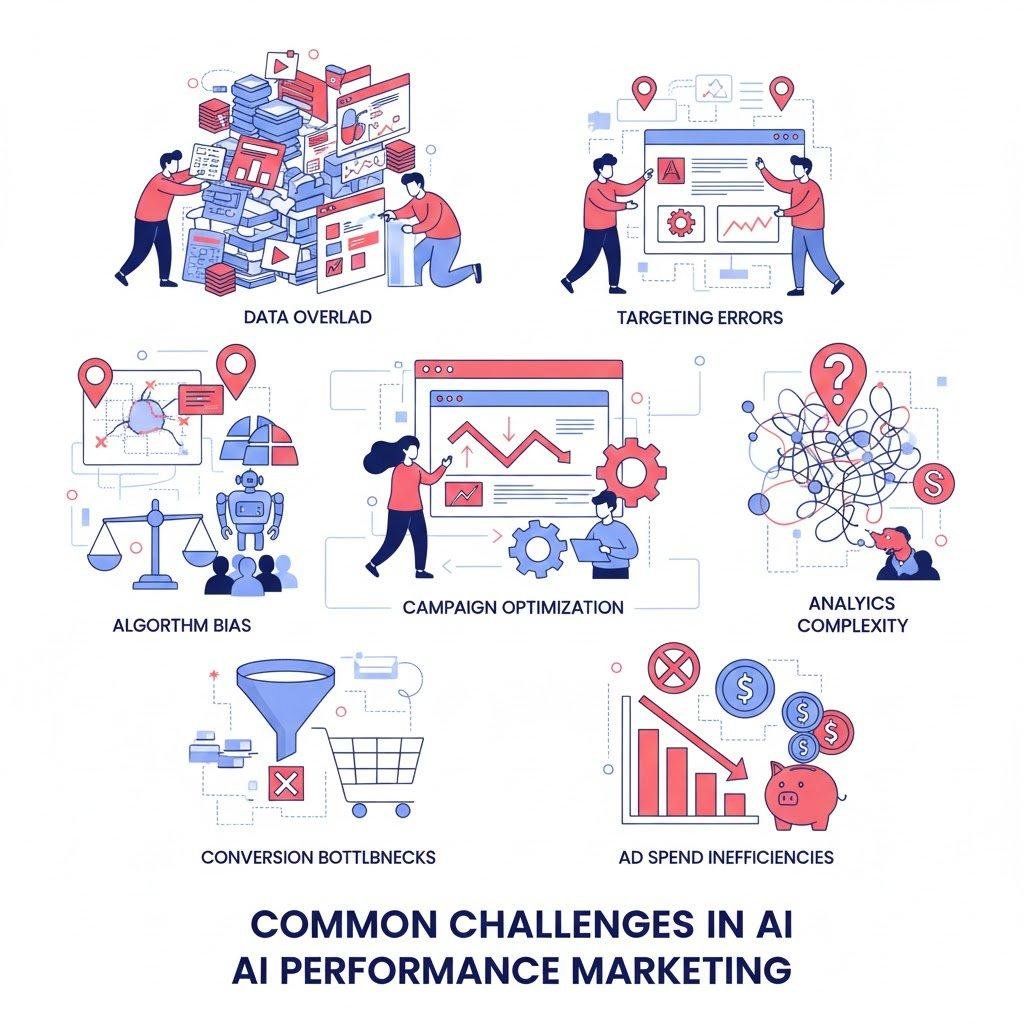
The biggest mistake with AI in Digital Marketing is publishing AI in Digital Marketing output as‑is. It is fast. It looks finished. Generic content rarely earns rankings or trust.
Google’s own guidance says AI‑generated content is not banned by default. However, content created mainly to manipulate rankings goes against its spam policies. What matters is whether the content is helpful and original. You can read the details in Google Search Central guidance on AI content.
So here is what I do differently. I use AI in Digital Marketing for research, brainstorming, keyword clustering, outlines, and repetitive tasks. I fact‑check every claim and add examples. Shape the piece around what the searcher wants. In short, I use AI in Digital Marketing to work, not to produce more.
My workflow for AI in Digital Marketing
This is the process I would give to any marketer starting this week. The tools are examples, so swap in what you use.
Phase 1: Plan
- Find the opportunity. Use Google Search Console to examine pages, queries, and gaps. Then ask ChatGPT to group keywords by search intent.
- Research competitors. Review ranking pages in Google. Look for shared themes, missing information, and unanswered questions.
- Build the brief.
Phase 2: Optimize
- Convert findings into a checklist.
- Fact‑check.
Verify claims using Google and Perplexity.
Always open the source.
Phase 3: Improve
- Track.
Watch impressions, clicks, rankings, engagement, and conversions in Search Console and GA4.
Compare all data against your starting baseline.
- I improve using data.
After one week, look for pages that have impressions. Few pages. Rankings near page one.
Then refine titles, headings, depth, internal links, and intent match.
Quick Wins for AI in Digital Marketing
Not ready for all eight steps? Start here:
• Cluster existing Search Console queries by intent.
• Rewrite one description.
• Fact‑check the performing page before its refresh.
When This Advice May Not Fit
My experience with AI in marketing comes mainly from one service‑based site, so your numbers may differ.
Industries with rules, such as health or finance, need review.
Tools also change fast, so treat any tool list as a starting point.
Finally, SEO takes time. Judge results over months, not days.
FAQs About AI in Digital Marketing
Will AI replace marketers?
Not in my experience. AI handles research and repetitive work well.
Strategy, judgment, and original insight still come from people.
Is AI‑generated content good for SEO?
Not automatically. Google focuses on whether the content’s valuable, not how it was made.
Unedited generic content is the risk.
How can AI save time on content research?
On my project, AI cut research and planning from 3–4 hours to 1–2 hours per article.
Your savings will depend on your process and tools.
What is the best way to start with AI in marketing?
Pick one task, such as keyword clustering. Measure the time saved.
Conclusion
AI in digital marketing is changing how strategies get built in 2026, but not who makes the decisions. The gains come from pairing fast AI research with human expertise, honest fact-checking, and steady measurement.
Your takeaways:
- Use AI for research, structure, and repetitive work.
- Add your own experience and verify every important claim.
- Measure against a baseline before crediting AI for results.
Start with step one this week, and let the data show you where AI in digital marketing helps most.